







St Mary's Chambers
5-7 Breadmarket Street
Lichfield, Staffordshire
WS13 6LQ
5-7 Breadmarket Street
Lichfield, Staffordshire
WS13 6LQ
Monday to Friday, 9am to 5pm
Search services, people and insights.
Every office can take your enquiry. Choose the one nearest to you.
Our offices are closed at the moment. Send an enquiry and we will reply during working hours.
Send an enquiryLichfield
Monday to Friday, 9am to 5pm. Closed now
Cannock
Monday to Friday, 9am to 5pm. Closed now
Sutton Coldfield
Monday to Friday, 9am to 5pm. Closed now
Dudley
Monday to Friday, 9am to 5pm. Closed now
Practical advice when a boundary, a neighbour, a tenancy, or a home you own with someone else turns into a dispute.


Ansons Law's residential property dispute solicitors act for homeowners, landlords, tenants, neighbours and co-owners in boundary and neighbour disputes, adverse possession claims, disputes over rights of way, easements and covenants affecting homes, possession and tenancy deposit claims and disagreements between people who own a home together. We start with the title documents, the tenancy agreement and the evidence. We give practical, commercial advice and take matters to court or a tribunal when that is what the case needs.
 Led by Ian Meadows, Director, Dispute Resolution & Property Litigation
 Jason Alcock, Director
Many residential property disputes turn on a notice or a deadline: a section 8 notice, a rent increase notice with a start date for the new rent, a letter from HM Land Registry about your land or a claim form with a date for your defence. A notice that is late, served on the wrong person or in the wrong form may not work, and you may have to start again. Court papers carry deadlines too, and ignoring them makes things worse. Take advice before you serve or respond to one.
A residential property dispute is a disagreement about a home or the land around it: who owns it, where the boundary lies, who can use it and how, whether a tenancy can be brought to an end or what happens to a deposit. It might be with a neighbour, a landlord or tenant or someone you own the home with.
Most of these disputes come down to the title documents, the plans, the tenancy agreement and what has actually happened on the ground over the years, so we look at those first. We then advise on the route that makes sense for your dispute, weighing the cost against what the home or the land is worth to you: negotiation, mediation or proceedings in court or a property tribunal.
If your dispute is about business premises, a commercial lease or development land, see our commercial property dispute solicitors page.
Boundary disputes often start with a fence, a hedge, a wall or a driveway. The plan at HM Land Registry usually shows the general boundary only, so the exact line can depend on the deeds, older plans, physical features and how the land has been used. Evidence from a surveyor often helps.
Neighbour disputes also include trespass, such as building or parking on land that is not yours, and nuisance, where a neighbour's use of their land unreasonably interferes with yours, for example through noise, smells, drainage or tree roots. Overhanging branches can usually be cut back to the boundary, but check first whether the tree is protected. Our guide to fallen trees and landowner liability explains who is responsible when a tree causes damage.
When a neighbour starts building, the Party Wall etc. Act 1996 may apply, but only to particular walls and works: a timber fence is never a party fence wall, and the Act does not decide where a boundary runs. Martin De Ridder's guide to common misconceptions about the Party Wall Act explains what it covers and what to do if no notice was served.
Many of these disputes settle through negotiation or mediation, and we help you weigh the cost of a dispute against the value of the land at stake. When a neighbour will not move, we issue proceedings or deal with a referral to the tribunal where the dispute arises from an application to HM Land Registry, and run the case through to a decision.
In some circumstances, a person who has occupied land as their own without the owner's permission may be able to become its legal owner. For homeowners it usually comes up with gardens, boundary strips, accessways and land a neighbour has fenced off or looked after for years.
For registered land, the person generally needs at least 10 years of adverse possession before applying to HM Land Registry, and the registered owner is usually told and can object. If the owner objects, the application usually fails unless a limited exception applies. For a garden or boundary strip the exception that matters is that the neighbour reasonably believed the land was theirs for at least 10 years. If the owner objects but then takes no steps to remove the neighbour for a further two years, the neighbour can apply again and will normally be registered as the owner. If the strip is unregistered land, the neighbour generally needs 12 years instead. Occupation with the owner's permission is not adverse possession, which is why written permission can protect a homeowner where a neighbour's use is meant to be temporary or informal.
We act for homeowners who want to keep their land and for occupiers who want to put what they have used for years on a proper footing. Our guide, Whose land is it anyway?, explains how claims work and how to protect your land.
An easement is a right over someone else's land, such as a right of way along a shared drive or path, a right to light or a right to run drains or cables under a neighbour's garden. Disputes arise over whether a right exists, where it runs and what it can be used for. A right may be written into the deeds or may have been gained through years of use, so how the drive or path has been used over time matters. Blocking a valid right of way can lead to a claim against you, so check the position before you put up a gate or a fence.
A restrictive covenant limits how land can be used, for example by restricting building or business use. With a covenant on a house or garden the questions are usually whether it still binds the land, whether it can be enforced and by whom. We advise on all three and act on applications to the court for a declaration about whether a covenant still affects land.
We act for landlords and for tenants in disputes about residential tenancies in England.
Read our guide to how evictions work now section 21 has gone, or watch the Legally Sound episode at the top of this page.
When co-owners fall out, whether former partners, relatives or friends who bought together, the questions are usually who owns what share and whether the home should be sold. A co-owner can ask the court to decide under the Trusts of Land and Appointment of Trustees Act 1996 (a TOLATA claim). The court can declare each person's share and can order a sale.
Where someone says they were promised a share, or paid towards the purchase or improvements on that understanding, the claim may rely on a constructive trust or proprietary estoppel. We also advise joint owners affected by a charging order against the other owner's share, which can lead to an application for the home to be sold even though the debt is not yours.
Separating from an unmarried partner? Our family team explains how TOLATA claims work for unmarried couples.
Sometimes a problem with a home comes from a professional's mistake, such as a conveyancer who missed a covenant or a right of way over the garden, or a survey that missed a serious defect. If that has cost you money, you may have a claim for professional negligence. Strict time limits apply, so see our page on professional negligence claims and take advice promptly.

We look at the title, the plans, any tenancy agreement and the evidence, then explain your options and the likely cost.
We gather what the case needs: photographs, older plans, rent statements, tenancy paperwork, witness statements and, where it helps, a surveyor's report.
We write to the other side to set out your position, serve the notice the case needs or respond to a claim on your behalf.
Where a sensible agreement is on offer we negotiate it, often with a mediator's help, then record it properly so that it can be enforced.
We issue and run proceedings in the County Court or High Court, or deal with a referral to the property tribunal, then present your case at the hearing.
A judgment or possession order is not the end. We enforce it, through the county court bailiffs or by transferring enforcement to the High Court where that is possible, and deal with any application the other side makes.
If neighbours cannot agree, the answer depends on the evidence: the deeds, older plans, physical features and how the land has been used, often with a surveyor's help. The plan at HM Land Registry usually shows the general boundary only. If the dispute cannot be settled, a court decides it. Where the dispute arises from an application to HM Land Registry, a tribunal decides instead.
They may be able to, if what they have done amounts to adverse possession: treating that part of your garden as their own, without your permission, for long enough. That is generally 10 years where your land is registered and 12 years where it is not. If your land is registered, HM Land Registry will usually tell you about an application and you can object, and an objection usually defeats the claim unless a limited exception applies, but you then need to act within two years. So do not ignore a letter from HM Land Registry about your land.
Only if they have no right to use it. A right of way can be granted in the deeds or gained through long use, so check the title documents and the history before blocking access. Blocking a valid right of way can lead to a claim against you.
Keep a record of the problem and, if you can, raise it with your neighbour. Noise and some other problems can also be reported to the local council. A nuisance claim can lead to a court order stopping the interference and to damages, and we advise on when to bring one.
Since 1 May 2026, landlords in England must serve notice under section 8 and rely on one or more legal grounds for possession. If the tenant does not leave, the claim goes to a hearing. The mandatory ground for rent arrears now needs at least three months' rent to be owed, both when notice is served and at the hearing. Read our guide.
In England a landlord must protect a tenancy deposit taken for an assured tenancy (most private residential tenancies) in an authorised scheme and give you the prescribed information within 30 days of receiving it. If that did not happen, you can apply to the county court, which can order the landlord to repay or protect the deposit and to pay you a sum of between one and three times the deposit. An unprotected deposit can also prevent the court making a possession order on most grounds until the landlord puts it right. If you are unsure whether your deposit is protected, check with the deposit schemes first.
Do not ignore it, and do not ignore court papers if a claim follows. Read the notice and the papers and note the hearing date and any deadline for a defence. Get advice early. The landlord has to prove a legal ground for possession at a hearing, and the notice has to be valid. Attend the hearing and explain your circumstances. Even where a possession order is made, the court can often allow more time before you have to leave.
Possibly. If co-owners cannot agree, any of them can ask the court to decide, and the court can order a sale. A creditor of one owner can also obtain a charging order against that owner's share and, in some cases, ask the court to order a sale.
 The Legal 500 UK 2025 (opens in a new tab)
 Nachural Summer Business Awards 2024: winner
 East Midlands Rainmaker Awards 2025: shortlisted
Tell us about the property and what has happened. If you have received a notice, a letter from HM Land Registry or court papers, tell us the dates on them. We will explain your options before you commit to anything.
 Dispute resolutionRenters' Rights Act: how evictions work now Section 21 has gone24 September 2026
 Dispute resolutionWhose Land is it Anyway? A Brief Guide to Adverse Possession16 July 2026
 Dispute resolutionCharging Orders – A Warning to all Joint Owners15 October 2025
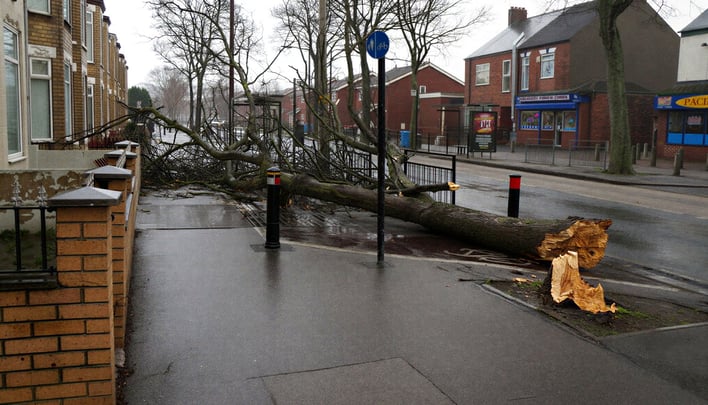 Dispute resolutionFallen Trees: Landowner Liability in High Winds (UK)14 October 2025