






St Mary's Chambers
5-7 Breadmarket Street
Lichfield, Staffordshire
WS13 6LQ
5-7 Breadmarket Street
Lichfield, Staffordshire
WS13 6LQ
Monday to Friday, 9am to 5pm
Search services, people and insights.
Every office can take your enquiry. Choose the one nearest to you.
Our offices are closed at the moment. Send an enquiry and we will reply during working hours.
Send an enquiryLichfield
Monday to Friday, 9am to 5pm. Closed now
Cannock
Monday to Friday, 9am to 5pm. Closed now
Sutton Coldfield
Monday to Friday, 9am to 5pm. Closed now
Dudley
Monday to Friday, 9am to 5pm. Closed now
Practical, commercial advice when a lease, a development deal or a piece of land turns into a dispute.


Ansons Law's commercial property dispute solicitors act for landlords, business tenants, developers, landowners and farming and rural estates in lease disputes, forfeiture and relief from forfeiture, renewals under the Landlord and Tenant Act 1954, break clauses, dilapidations, overage and development agreement disputes, restrictive covenants, rights of way, adverse possession, trespass and nuisance and public rights of way and village green cases. We start with the lease, the title and the evidence. We give practical, commercial advice and take matters to court or a tribunal when that is what the case needs.
 Led by Ian Meadows, Director, Dispute Resolution & Property Litigation
 Jason Alcock, Director
A break notice and a section 25 notice or section 26 request under the Landlord and Tenant Act 1954 each has to be in the right form, served on the right person by a permitted method and within the time the lease or the Act allows. A section 146 notice before forfeiture has to set out the breach, require it to be put right where it can be and allow the tenant a reasonable time to do so. A notice that is late, wrongly worded or served on the wrong party may not work, and a break notice cannot be withdrawn once it has been served. Take advice before you serve a notice and as soon as you receive one.
A commercial property dispute is a disagreement about business premises or land: what a lease requires, whether it can be ended or renewed, whether a development agreement has been honoured, who owns land or a right over it and who can use it and how. It might be between a landlord and a business tenant, between neighbouring landowners, with a developer or a buyer or with a local authority over a public right of way.
These disputes tend to turn on the lease, the title documents, the plans and what has happened on the ground, so we review those early. We then give you practical, commercial advice on the route most likely to resolve things at a sensible cost, whether that is negotiation, mediation or proceedings in court or a property tribunal. We act for landlords and tenants, developers, landowners, farmers and estates and businesses with premises across the Midlands.
If your dispute is about your own home, a residential tenancy or a neighbour, see our residential property dispute solicitors page.
Most commercial property disputes start with the lease. We act for landlords and for tenants on:
We also act in possession claims and in claims for other sums due under a lease. Our guide to what good repair and condition means for a tenant is a useful starting point on repairing obligations.
A break clause lets a landlord, a tenant or both end a lease before the end of its term, but only if it is exercised strictly as the lease requires. Disputes follow when a notice is served late, by or on the wrong person, in the wrong form or by the wrong method, or when a condition of the break is not met by the break date. Common conditions include paying all sums due, giving vacant possession and complying with the tenant's covenants, and a failure on any of them can leave the lease running for the rest of the term.
Once served, a break notice cannot be withdrawn, even by agreement. If the tenant then stays on with the landlord's agreement, a new tenancy is likely to arise from the break date, on unclear terms and, unless it is only a tenancy at will, with 1954 Act protection that cannot be excluded after the event, so the terms of any continued occupation need to be documented before the break date. Ending a lease by a break also does not release a tenant from liabilities that arose before it, such as disrepair, so a dilapidations claim can follow.
We act for landlords and tenants in disputes over whether a break has worked, and we advise before a notice is served on getting the form, the service and the conditions right. Read our guides to exercising a break clause and negotiating one.
Where a tenant occupies premises for the purposes of its business, Part II of the Landlord and Tenant Act 1954 usually gives it security of tenure, unless the lease was contracted out of the Act before it was granted. A protected tenancy does not end when the contractual term runs out. It continues until it is ended in one of the ways the Act allows, and either the landlord or the tenant can apply to the court for a new tenancy. The application must be made no later than the date given in the section 25 notice, or the day before the date given in the section 26 request, unless the landlord and tenant agree in writing before then to extend the time. A tenant who misses that date loses the right to renew.
The process runs on statutory notices. A landlord ends the tenancy with a section 25 notice, given between six and twelve months before the date it names, and must say whether it opposes a new lease and on which grounds. A tenant with a fixed-term lease of more than a year can start the process with a section 26 request in the prescribed form, setting out its proposals for the property, the rent and the other terms of the new lease. A landlord that wants to oppose a new lease must then serve a counter-notice within two months stating its grounds. Both notices have strict timing rules, and a mistake can cost a landlord its ground of opposition or a tenant its right to renew.
A landlord can oppose renewal only on the grounds in section 30 of the Act. They include the tenant's failure to keep the premises in repair, a persistent delay in paying rent, other substantial breaches of the lease, an offer of suitable alternative accommodation, an intention to demolish or reconstruct the premises and an intention to occupy them for the landlord's own business. Some grounds depend on the tenant's conduct and others on the landlord's plans, and the evidence for each is different. We advise landlords on whether a ground can be made out and tenants on how to test it.
Breaks and renewals interact. Our guide to exercising a commercial break clause explains why a landlord's break does not by itself remove a protected tenant's right to a new lease.
Development deals create obligations that run for years, and a disagreement over them can hold up a site or a sale. We act in disputes over overage payments, option agreements, conditional contracts and development agreements, for landowners, developers and buyers.
Restrictive covenants can stop or limit what is built on land. We advise on whether a covenant still binds the land and who can enforce it, and we act on applications to the court for a declaration about whether a covenant affects land that is to be developed.
Rights of way and easements, such as a right of access, a right to run services across neighbouring land or a right to light, can decide whether a site can be developed at all. On a development site the arguments are usually about whether a right exists at all, the route and width it takes across the land, whether it can carry the extra traffic or services the development needs and whether it has been registered. A right can be granted in the title deeds or acquired through long use, so before a site is bought or developed the history of how it and the land around it have been used matters as much as the register.
Landowners also face adverse possession claims over strips of land, accessways and areas a neighbour has fenced off or maintained. For registered land a claimant can apply to HM Land Registry after at least 10 years of adverse possession. The registered owner is notified and can object, and once it objects the application usually fails unless a limited exception applies, the commonest being a boundary case where the claimant reasonably believed for at least 10 years that the land was theirs (Brown v Ridley [2025] UKSC 7). For unregistered land the claim is governed by the Limitation Act 1980 and the period is generally 12 years, so unregistered title to any part of a site needs checking before a purchase or a development. Regular inspections, documented boundaries, prompt challenges to encroachments and written permission for any informal use all protect your land. For more on how claims work and how to protect land you own, read Whose land is it anyway?, our guide to adverse possession. We also act in land registration disputes, including objections to applications at HM Land Registry and the tribunal proceedings that follow.
Trespass is entering or using land without permission: unauthorised occupiers on a yard, a car park or a development site, a neighbour building or parking over the boundary or someone using an access they have no right to. We act for landowners in possession claims against trespassers and in claims for an injunction and damages, and we act quickly where a neighbour's works or use is interfering with access to your premises.
Nuisance is an unreasonable interference with the use of your land from someone else's, such as noise, dust, smells, flooding or drainage from a neighbouring site. Encroaching tree roots and branches can be a nuisance too. A landowner is liable for a tree that falls or sheds a branch only if it knew, or ought reasonably to have known, that the tree was unsafe and did not take reasonable steps to deal with it. Councils and larger landowners are expected to run a proper inspection system by competent people. Every owner should look over its trees regularly and after every storm and keep records of checks, reports and work done. In England you normally need the council's written consent before working on a tree with a preservation order. Dead trees can be felled after five working days' written notice and dead branches removed without notice. Work urgently needed to remove an immediate risk of serious harm can be done straight away, with written notice to the council as soon as practicable and no more work than is needed to make the tree safe. Our guide to fallen trees and landowner liability explains more.
A claim that the public has a right of way across your land, or that the land is a village green, can change what you can do with it. Ian Meadows advises landowners, farmers and estates on these cases, which turn on the Wildlife and Countryside Act 1981, the Highways Act 1980 and the Commons Act 2006 and are decided on long-use evidence, interruption and statutory tests.
Public footpaths and bridleways are recorded on the definitive map and statement kept by the local surveying authority. The authority must modify the map by order when evidence shows that a right of way exists, or when long public use of a way raises a presumption that it has been dedicated as a public path. We act on definitive map modification order applications and objections, on diversion applications and at public inquiries.
Land can be registered as a town or village green where a significant number of local inhabitants have used it as of right for lawful sports and pastimes for at least 20 years. The use must still be going on when the application is made, or in England have stopped within the last year. In England the right to apply is suspended once a trigger event has happened, such as a planning application for the land being publicised or the land being identified for development in a draft or adopted local plan, and it revives only if a matching terminating event occurs, for example the application being withdrawn or refused. A landowner can also deposit a statement with the commons registration authority under section 15A of the Commons Act 2006, which stops further use counting as 'as of right'. Registration has serious consequences for a landowner or a developer, so an application needs a prompt, evidenced response. Ian has acted in definitive map modification and village green proceedings in the High Court and the Court of Appeal.
Some property disputes come from a professional's error: a notice served late or on the wrong party, advice that missed a covenant or a right of way over a site and a survey or valuation that missed a serious problem. If that has cost your business money, you may have a claim for professional negligence against the solicitor, surveyor, valuer or other adviser. You generally need to show a duty of care, a breach of the standard expected and a loss caused by the breach, and the basic time limit is usually six years, so take advice promptly. See our page on professional negligence claims.

We read the lease, the title, the plans and any notices, then explain your options, the timetable and the likely cost.
We gather what the case needs: rent accounts, schedules of condition, surveyors' reports, older plans, photographs and witness statements.
We serve or respond to the notices the lease or the Act requires, and write to the other side to set out your position or answer a claim.
We negotiate terms such as a new lease, a payment or a settlement, using mediation where it helps and without weakening your position.
Where the case needs it, we issue and run the claim in the County Court or the High Court, or the application to the property tribunal, and we defend claims brought against you.
We see the case through to judgment or a tribunal decision, including orders for possession, declarations and damages, then enforce the result.
A landlord can forfeit a lease, ending it and taking the premises back, if the lease allows it and the tenant is in breach. For breaches other than unpaid rent the landlord must usually first serve a notice under section 146 of the Law of Property Act 1925 that sets out the breach and, where it can be put right, gives the tenant a reasonable time to do so. A tenant facing forfeiture can apply to the court for relief from forfeiture, which the court can grant on terms, so neither side should assume the lease is over. Where the breach is disrepair under a lease granted for seven years or more with at least three years left, the tenant may also be able to serve a counter-notice under the Leasehold Property (Repairs) Act 1938, after which the landlord needs the court's permission to go on.
Usually, yes. Where a tenant occupies premises for its business, Part II of the Landlord and Tenant Act 1954 gives it security of tenure unless the lease was contracted out of the Act before it was granted. The tenancy continues after the contractual end date until it is ended in a way the Act allows, and either side can apply to the court for a new tenancy. The application has to be made by the date in the landlord's section 25 notice, or the day before the date in the tenant's section 26 request, unless an extension is agreed in writing before then. A tenant who misses that date loses the right to renew. The landlord can only resist a new lease on the grounds set out in the Act.
Only on the grounds in section 30 of the Landlord and Tenant Act 1954, which the landlord must state in its section 25 notice or in a counter-notice served within two months of the tenant's section 26 request. A landlord who misses that deadline cannot oppose the renewal. They include the tenant's failure to keep the premises in repair, a persistent delay in paying rent, other substantial breaches, an offer of suitable alternative accommodation, an intention to demolish or reconstruct the premises and an intention to occupy them for the landlord's own business. Each ground has to be proved with evidence.
A break right usually has to be exercised strictly in accordance with the lease. A notice served after the deadline, or by or on the wrong party, is invalid. The lease then carries on for the rest of its term with all of its obligations. A break can also fail if a condition, such as paying all sums due or giving vacant possession, is not met by the break date. Once a valid notice has been served it cannot be withdrawn, even if both sides agree.
A landlord can claim for breaches of the tenant's repairing, decorating and reinstatement obligations at the end of the lease, known as a dilapidations claim. What can be claimed depends on the wording of the lease, any licences for alterations and any schedule of condition agreed at the start, which can limit what the tenant has to put right. Damages are capped by section 18 of the Landlord and Tenant Act 1927 at the loss in value of the landlord's interest caused by the disrepair, and nothing is recoverable if the premises are to be demolished or substantially altered, so what the landlord intends to do with the building matters as much as the schedule. Ending a lease early under a break clause does not release the tenant from liabilities that arose before the break date.
It can happen. Adverse possession lets someone who has treated your land as their own, without your permission, for long enough apply to be registered as its owner. For registered land the application can be made to HM Land Registry after at least 10 years. You will be notified and can object, and once you object the application usually fails unless a limited exception applies, the commonest being a boundary case where the applicant reasonably believed for at least 10 years that the land was theirs. For unregistered land the period is generally 12 years. Inspecting the whole site regularly, challenging encroachments promptly and putting any informal use in writing as a permission are the practical protections.
Yes, in some circumstances. Long public use of a route can raise a presumption that it has been dedicated as a public path, and the local surveying authority must then modify the definitive map by order, which anyone can apply for. Land can also be registered as a town or village green where a significant number of local inhabitants have used it as of right for lawful sports and pastimes for at least 20 years and are still doing so, or in England stopped within the last year. In England the right to apply is suspended once a trigger event has happened, such as a planning application for the land being publicised, and revives only if a matching terminating event occurs, such as that application being withdrawn or refused. Both turn on evidence of use over many years, so a landowner who wants to object needs to gather its own evidence early.
It depends on the dispute and how it is resolved. We will give you a clear view of the likely costs and options at the start and keep you updated as the case develops, so you can weigh the cost against what is at stake for the business.
 The Legal 500 UK 2025 (opens in a new tab)
 Nachural Summer Business Awards 2024: winner
 East Midlands Rainmaker Awards 2025: shortlisted
Tell us about the premises or the land and what has happened. If you have received a notice, a schedule of dilapidations, a letter from HM Land Registry or court papers, tell us the dates on them. We will explain your options before you commit to anything.
 Commercial propertyBreaking point: how to exercise a commercial break clause8 September 2026
 Commercial propertyWhat does “good repair and condition” mean for a Tenant?15 October 2025
 Commercial propertyBreak clauses: how to negotiate them, and avoid the pitfalls15 October 2025
 Dispute resolutionWhose Land is it Anyway? A Brief Guide to Adverse Possession16 July 2026
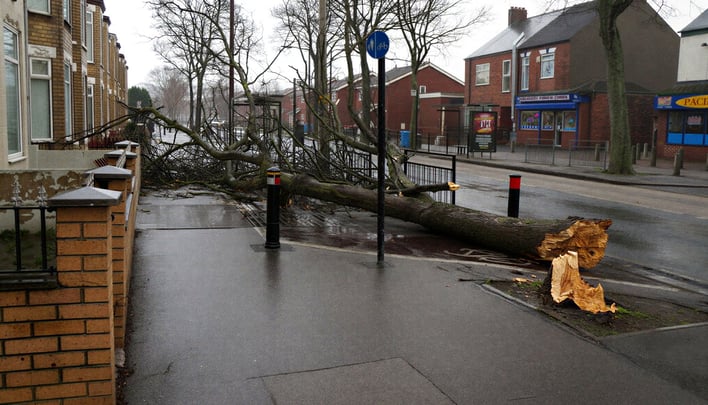 Dispute resolutionFallen Trees: Landowner Liability in High Winds (UK)14 October 2025