For many employers, the Budget on 28 October 2026 was less about headline tax changes and more about costs. The National Living Wage rises again in April 2027, income tax thresholds stay frozen and business rates relief has been extended for high street businesses.
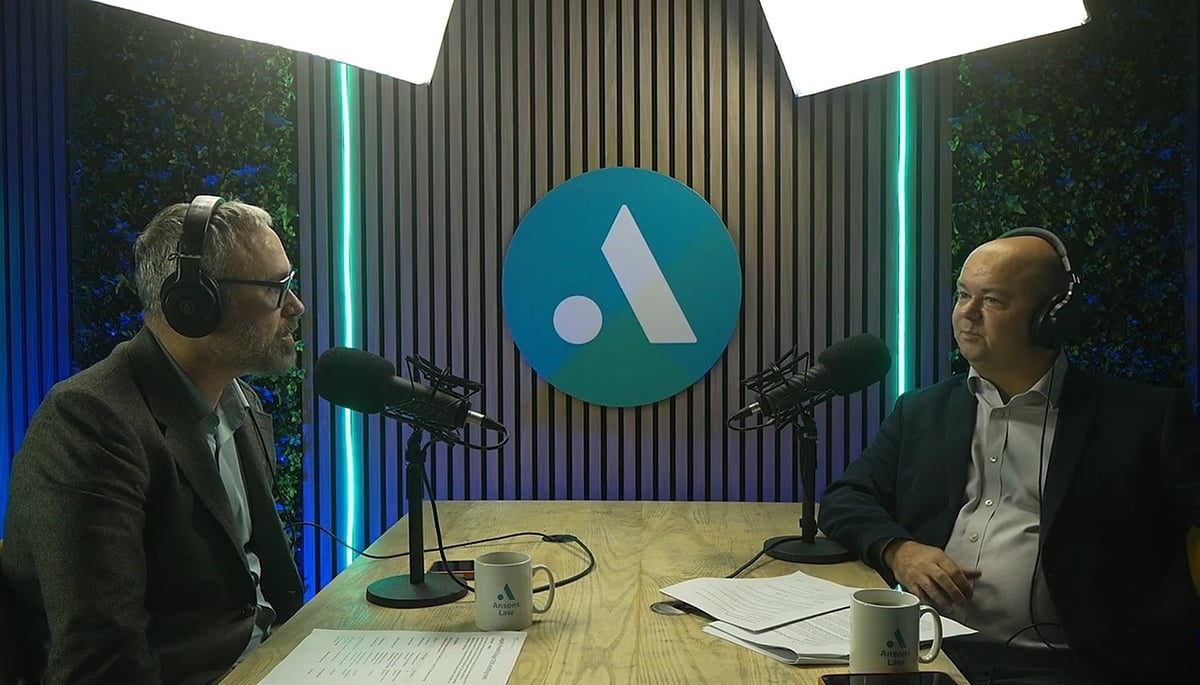
In a Budget Special of Legally Sound, the Ansons Law podcast, Martin De Ridder, Managing Director of Ansons Law, was joined by Neil Jones, Director and Joint Head of our Corporate and Commercial team, to look at the pressure on employers and whether the Budget does enough to ease it. Martin advises employers on pay and employment terms, and Neil advises owner-managed businesses across the region.
Key takeaways
- From 1 April 2027 the National Living Wage rises 3.9% to £13.21 an hour, with the same 3.9% increase for younger workers and apprentices.
- Pay rises at the bottom push up pay expectations further up the scale.
- Income tax thresholds remain frozen until April 2031.
- From 1 April 2027, qualifying retail, hospitality and leisure businesses in England that are eligible for small business rates relief will pay no business rates on a property with a rateable value up to £18,000, with partial relief up to £21,000.
- Rates relief will not offset wider cost increases for most employers, particularly manufacturers.
How much is the minimum wage going up?
The government accepted the Low Pay Commission's recommendations in full. From 1 April 2027:
- National Living Wage (21 and over): £13.21, up 50p
- 18 to 20 year olds: £11.27, up 42p
- 16 and 17 year olds: £8.31, up 31p
- Apprentice rate: £8.31, up 31p
Each is a 3.9% increase. The Low Pay Commission recommended pausing progress towards bringing the 18 to 20 rate into line with the adult rate, because demand for young workers has slowed, and the government accepted this.
Why does it affect more than the lowest paid?
Employers rarely raise only the lowest rate. To keep a gap between new starters and more experienced staff, pay tends to rise across the lower grades. Neil describes the effect:
"It's not just that, of course, it's then the domino effect up the scale."
That knock-on effect is the real cost for many businesses, particularly in hospitality, retail, care and manufacturing.
What about frozen tax thresholds?
The personal allowance (£12,570) and the higher rate threshold (£50,270) have been frozen since April 2021 and will stay frozen until April 2031, after the freeze was extended in the November 2025 Budget. As wages rise, more of each pay rise is taxed, and more employees are drawn into higher rate tax. Martin's view is that this has been the largest tax rise of recent years:
"The biggest tax rise has been in effect the tax thresholds, the rates at which you go and become a higher tax payer. And in effect they've been frozen."
The gap between minimum wage pay and the higher rate threshold is now narrow. A full-time worker on the new National Living Wage, working 37.5 hours a week, will earn about £25,800 a year, roughly half of the higher rate threshold.
This comes after the April 2025 increase in employer National Insurance contributions, which already raised the cost of employing most staff. Neil's view of the Budget as a whole:
"It was a steady as she goes budget, but when you're on choppy waters, you kind of need a little bit more."
What has changed on business rates?
The Budget targeted relief at retail, hospitality and leisure businesses in England, especially smaller ones. From 1 April 2027:
- The threshold for full small business rates relief for these properties rises from a rateable value of £12,000 to £18,000.
- Tapered relief will apply up to a rateable value of £21,000, up from £15,000.
- Increases in bills for qualifying retail, hospitality and leisure properties of all sizes will be capped at CPI inflation in 2027/28 and 2028/29.
The government expects around 70,000 more high street businesses to pay no business rates as a result. Pubs, social clubs and live music venues also get additional relief from 1 April 2027. Some businesses are excluded: vape shops, for example, lose both small business rates relief and the lower retail, hospitality and leisure rates.
Will it help the high street?
It is aimed at the high street, but councils also depend on rates income. From a council's point of view, large properties such as distribution warehouses bring in far more of it than small shops, which could shape planning decisions.
For most businesses, the relief is modest compared with the rise in wage and energy costs over recent years. Neil asks the obvious question:
"Is it enough when you look at the increase in costs to business that have happened over the last 3 to 5 years?"
For manufacturers, where energy is one of the biggest overheads, business rates relief is unlikely to make a difference to decisions on growth or hiring. The Budget's main help for them is elsewhere: from April 2027, the British Industrial Competitiveness Scheme will cut electricity bills by up to 25% for more than 10,000 eligible manufacturers in Great Britain.
What about local and regional funding?
The Budget also set out a fiscal devolution roadmap. Mayoral strategic authorities will receive a 20% share of business rates from April 2027, a share of income tax from 2028/29 and full retention of business rates by the end of the decade. Each area's starting point will be set at the 2027 Spending Review. Staffordshire does not have a mayor yet, but the government says it is in the final stages of agreeing a mayoral authority for Stoke and Staffordshire.
For the West Midlands and Staffordshire, the question is whether keeping more locally raised tax leaves the region better or worse off. London and the South East raise a far larger share of national tax receipts. The new system will start from baselines set by the government rather than from what each area raises on its own, so the detail of those baselines will decide who gains. We will look at this again once the figures are known.
The Budget also cut Business Asset Disposal Relief and announced Founders' Relief, which we cover in separate articles.
What should employers do now?
- Budget for the April 2027 rates now, including the knock-on effect on pay differentials.
- Check that pay for salaried staff still meets the minimum wage once hours worked are taken into account.
- Review salary sacrifice and deductions, which can take pay below the minimum wage.
- Check whether your premises qualify for the new business rates thresholds.
- Review employment contracts and pay structures if you are planning changes to terms.
Martin De Ridder and Neil Jones discuss the minimum wage, business rates, BADR, Founders' Relief and the wider Budget in the Budget Special of Legally Sound, the Ansons Law podcast. Watch the episode.
How we can help
Our Employment team advises employers on pay, contracts and changes to terms and conditions. Our Corporate and Commercial team, led by Neil Jones and Jamie Gill, advises owner-managed businesses on planning for growth and exit.
If you need advice on how the Budget affects your workforce or your business, please fill out the contact form on this page, email info@ansons.law or call 01543 267988 and a member of our Employment team will get back to you.
Rates and rules can change, and some of the Budget measures described here still have to be passed into law. Take individual professional advice before acting.
This article is for general information only and does not constitute legal advice. Specific legal issues always require the advice of a qualified legal professional.




 Wrote this articleMartin De RidderManaging Director
 In the episodeNeil JonesDirector, Joint Head of Corporate & Commercial, Compliance Officer for Legal Practice (COLP)