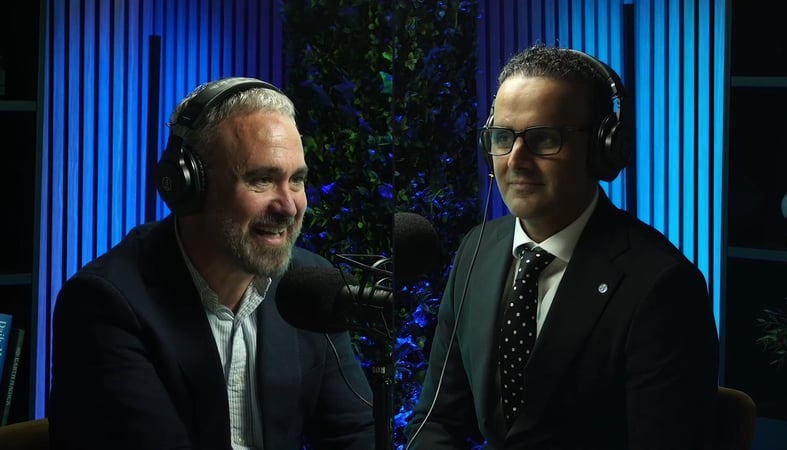
Late payment is one of the biggest pressures on small businesses. The Government has now introduced the Commercial Payments Bill, which it describes as the most significant legislation to tackle late payments in over 25 years. On the latest episode of Legally Sound, the Ansons Law podcast, Ranjit Shergill, Associate Director in our Dispute Resolution team, explains what the Bill would change, what it means for suppliers and where it may fall short.
Key takeaways
- The Bill would amend the Late Payment of Commercial Debts (Interest) Act 1998 and give the Small Business Commissioner much stronger powers.
- Most commercial contracts would be subject to a maximum payment term of 60 days.
- Interest on late payments at 8% above the Bank of England base rate would become mandatory.
- The Commissioner would be able to investigate poor payment practices, adjudicate disputes outside the courts and fine persistent late payers.
- The Bill has passed the House of Lords and is now before the House of Commons. It is not yet law and no commencement date has been set.
What is the Commercial Payments Bill?
The Bill was introduced in the House of Lords on 19 May 2026 and is sometimes referred to as the Small Business Protections Bill. It builds on the existing late payment legislation rather than replacing it.
"It is going to amend the Late Payment of Commercial Debts Act. And I think the key focus is it's there to protect small businesses' payments from large businesses."
What does the current law say?
Under the 1998 Act, a business that is paid late by another business can already claim statutory interest at 8% above the Bank of England base rate, together with fixed compensation for each invoice. The compensation is £40 for debts under £1,000, £70 for debts of £1,000 to under £10,000 and £100 for debts of £10,000 or more.
The weakness of the current regime is that businesses can contract out of statutory interest, provided the contract gives a substantial alternative remedy for late payment. In practice, many smaller suppliers accept the larger customer's terms because they have little choice.
What would the Bill change?
The main proposals are:
- A 60-day maximum payment term for most commercial contracts, subject to limited exemptions.
- Mandatory interest on late payments at 8% above base rate, which would be much harder to contract out of.
- A penalty payment for suppliers where a customer raises a dispute about an invoice late or without enough information.
- New powers for the Small Business Commissioner to investigate, adjudicate and impose financial penalties.
- Stronger reporting requirements for large businesses on their payment practices.
- A ban on retention clauses in the construction sector.
The measures apply only to business-to-business contracts within the UK.
How would the Small Business Commissioner's new powers work?
The Commissioner already exists and accepts complaints from small businesses, but it cannot currently compel a larger business to pay. Under the Bill, the Commissioner would be able to adjudicate contractual payment disputes between small and larger businesses outside the court process and make binding interim decisions. It would also be able to take enforcement action, including fines, against businesses that persistently pay late.
"I think that's the thrust behind the legislation. We actually want to keep it away from the courts."
The detail of how adjudication will work is not yet known. Ranjit expects something closer to an ombudsman scheme than a court.
"I think it won't be too dissimilar from the Ombudsman. I think probably we're looking at some form of adjudication."
Why does speed matter for small businesses?
At present, a supplier chasing an unpaid invoice will usually have to issue a court claim, often through Money Claim Online. If the customer files a defence, even a weak one, it can take 12 to 18 months to reach a final hearing. For a small business, waiting that long for money it is owed can be the difference between surviving and failing.
Insolvency proceedings, such as a winding-up petition, are only appropriate where the debt is undisputed. Where there is any genuine dispute, the court process is the correct route.
Construction disputes show what a faster system can look like. Under the statutory adjudication scheme, a decision is usually reached within 28 days of referral. The decision is binding until the dispute is finally resolved, and the courts will normally enforce it quickly through summary judgment. If adjudication by the Small Business Commissioner follows a similar model, suppliers could get a binding decision in weeks rather than months.
Why do reporting requirements matter?
Large businesses already have to report on their payment practices, and the reforms would go further. That gives suppliers useful information before they agree to trade with a customer.
"If I'm trading with somebody, I'd wanna know if they're good to pay my invoice. So I think that's a step in the right direction."
A supplier that knows a customer has a poor payment record can price its work, set credit limits or ask for payment on account.
"If you've got the options there, you can cut your commercial model accordingly."
Are there exceptions?
Yes. The Bill does not apply to cross-border contracts, so businesses trading with customers or suppliers outside the UK will continue to agree their own terms. The 60-day cap is also subject to limited exemptions, and the detail is likely to change as the Bill progresses.
Larger businesses have argued that strict payment terms would affect their cash flow and do not reflect how their industries operate. The concern is that the imbalance between large and small businesses remains.
"If I'm a small business and I'm dealing with a bigger business, obviously there's an inequality in bargaining position there."
Ranjit accepts that there are arguments on both sides. A business that buys goods, processes them and sells them on may need time to receive payment itself before it can pay its own suppliers.
"I can see why it seems inequitable. But I can also see the attraction from the other side as well."
When will the Bill become law?
Not yet. The Bill completed its stages in the House of Lords on 20 October 2026 and was introduced in the House of Commons the following day. It now has to pass through every stage in the Commons before it can receive Royal Assent. No commencement date has been set, and the Bill may be amended along the way.
What should businesses do now?
- Suppliers: review your terms and conditions so that payment terms, interest and the right to compensation are clearly set out.
- Suppliers: chase overdue invoices promptly and claim statutory interest and compensation where it applies.
- Larger businesses: review your payment processes now, including how and when invoice disputes are raised.
- All businesses: check standard contract templates against the proposed 60-day cap.
Ranjit and Martin De Ridder discuss the Commercial Payments Bill on Legally Sound, the Ansons Law podcast. Watch the episode.
How we can help
Our Dispute Resolution team regularly acts for businesses recovering unpaid debts and advises on payment terms in commercial contracts. Ranjit Shergill and the team can help you get paid and protect your cash flow.
If you need advice on recovering an unpaid debt or reviewing your payment terms, please fill out the contact form on this page, email info@ansons.law or call 01543 267988 and a member of our Dispute Resolution team will get back to you.
This article is for general information only and does not constitute legal advice. Specific legal issues always require the advice of a qualified legal professional.



 Wrote this articleRanjit ShergillAssociate Director