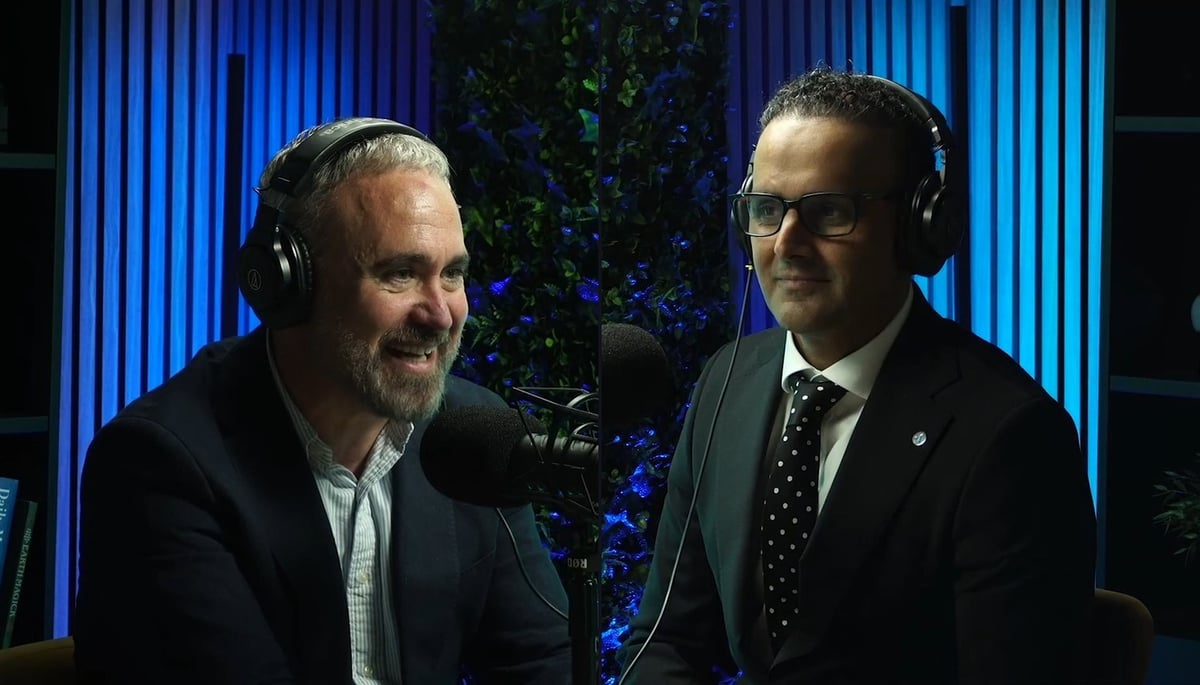
Manchester City have lodged their appeal against the Premier League commission's finding that the club broke the league's financial rules. On the latest episode of Legally Sound, the Ansons Law podcast, Martin De Ridder, Managing Director of Ansons Law, discusses with Ranjit Shergill, Associate Director in our Dispute Resolution team, how City are likely to fight the decision, why competition law could become the centre of the case, and why the dispute with rival clubs may only end around a negotiating table.
Martin acts on commercial, shareholder and insolvency disputes.
Key takeaways
- The independent commission found City guilty of 114 of the 115 charges on 29 September 2026. City lodged an appeal on 1 October, and the Premier League's appeal process is expected to run for around 12 weeks.
- After the appeal, any challenge in the High Court is likely to focus on how the decision was reached rather than rerunning the evidence.
- Martin expects City to lead with competition law, arguing that the rules protect the established clubs and keep new money out.
- Rival clubs' compensation claims will turn on what would have happened without City's spending, which is very hard to prove across nine seasons.
- Martin believes mediation, following the example of rugby union's Saracens case, is the realistic way to bring the dispute to an end.
What happens after the Premier League appeal?
City's appeal goes to the Premier League's own Appeal Board, under the timetable in the league's handbook. Ranjit expects the appeal decision to be binding within the league's framework, which leaves City with a challenge in the courts.
"I think the only approach thereafter Man City will have will be to go to the High Court to not so much reconsider the entire decision but consider how the decision was reached."
A challenge of that kind looks at whether the process was fair and the rules were applied lawfully. It does not ask a judge to weigh the evidence again. Martin's view is that the Premier League process may finish this season, but the wider dispute will not.
"It's going to form part of a massive civil dispute because we do anticipate that there's going to be a significant damages claim from a number of the other clubs against Man City in relation to the losses that they have suffered as a result of what they will say is Man City's cheating."
What did the commission find?
The decision centres on how City's sponsorship income was funded. The commission found that sponsorship deals with companies connected to the club's owners were in reality largely paid for by the ownership. That inflated City's revenue and allowed it to spend more than the profitability and sustainability rules (PSR) would otherwise have permitted. The judgment describes the arrangements as shams and a disguised funding scheme.
Why could competition law be City's lead argument?
Competition law, which the Americans call antitrust, prohibits arrangements that restrict competition, including arrangements that keep new businesses out of a market. City's argument would be that rules limiting owner investment protect the clubs with the biggest historic fan bases and revenues, and make it harder for anyone else to break into the top tier and stay there.
City have used this route before. In 2024 an arbitration panel found that parts of the Premier League's rules on associated party transactions breached competition law, although the league said most of City's challenge had failed. Martin expects the same approach once this dispute reaches the courts.
"I certainly think by the time it gets into the High Court, and it will go right the way up to the Supreme Court if it runs as far as that, I think we're going to be into the situation of the competition law is going to be the lead punch."
Martin also points to Midlands history. Jack Walker funded Blackburn Rovers to a Premier League title with his own money, and Sir Jack Hayward invested heavily in Wolverhampton Wanderers, where the episode was recorded. The question City will ask is why owners with billions from overseas should be treated differently.
Why might that argument fail?
Ranjit is sceptical. City signed up to the Premier League rules, and the rules were in place long before the club challenged them.
"We're talking about a very sophisticated organisation here. So we're not talking about a consumer who may be ill informed. These people are advised what they're getting themselves into."
Ranjit also argues that the rules exist to stop clubs going under, not to stifle competition. The PSR limit allowed losses of up to £105 million over three years.
Martin is less convinced that signing up settles it. A club that wants to play in the Premier League has to accept the rules.
"What, sign up to the rules or not be in the Premier League? It's hardly like a willing consent if it is an anti-competitive cartel-like arrangement."
Can rival clubs prove what they lost?
The only precedent is Burnley's claim against Everton. In June 2026 a Premier League commission ordered Everton to pay Burnley £26 million plus around £9 million in interest, finding that Everton's breach of the rules contributed to Burnley's relegation in 2022. The commission relied on expert modelling that ran 100,000 simulations of Everton's results. Everton are appealing.
"How do you determine what would have happened if the offending party hadn't had a sporting advantage?"
Burnley's claim was about one season and one relegation place. A claim against City covers nine seasons, titles, European places and cup runs, with many clubs affected. Martin is not persuaded by the headline figures in the media.
"I'm sceptical. There's obligations to mitigate its loss. There's money flowing in the other direction."
He gives the example of Arsenal, who sold a number of players to City in the early years of the current ownership. Any loss a club claims would have to take that into account.
Four clubs, Arsenal, Liverpool, Manchester United and Tottenham, are reported to have served notices in 2024 to protect their right to claim. Disputes between clubs go to arbitration under the Premier League rules, and Martin's view is that these were most likely notices of arbitration, with the claims then put on hold.
Is there a precedent for settling?
Martin points to rugby union. In 2019 Saracens were found to have breached the Premiership salary cap through business investments with players that sat outside their declared salaries. Saracens were deducted 35 points and fined £5.36 million, and were later relegated at the end of the 2019/20 season.
"It was agreed in what used to be called a smoke-filled room as between the other clubs, the league itself and Saracens. That's what's got to happen here, isn't it?"
Ranjit agrees that a negotiated outcome is the realistic end point.
"I think what really we're talking about is a settlement agreement."
Why mediation?
Martin proposes two mediations. The first, between the Premier League and City, would deal with the sanction, any titles and compensation to the league. The second would bring the affected clubs together collectively against City on compensation. Without that, Martin expects the dispute to run for years.
"The nebulous nature of this highlights why parties need to sit around a table."
What should businesses take from this?
The same principles apply to commercial disputes well beyond football.
- Signing up to standard terms does not always end the argument. Terms that restrict competition can be challenged, but a sophisticated, well-advised party will find it harder.
- Where a dispute depends on what would have happened, proving loss is expensive and uncertain on both sides.
- Check your dispute resolution clause. It may send your claim to arbitration rather than the courts.
- Mediation can deal with issues a court cannot, and usually costs far less than litigation.
Martin and Ranjit discuss the Manchester City appeal on Legally Sound, the Ansons Law podcast. Watch the episode.
How we can help
Our Dispute Resolution team, led by Jason Alcock, acts on commercial, shareholder and insolvency disputes. We help clients resolve disputes through negotiation and mediation as well as through the courts and arbitration.
If you need advice on a commercial dispute, please fill out the contact form on this page, email info@ansons.law or call 01543 267988 and a member of our Dispute Resolution team will get back to you.
This article is for general information only and does not constitute legal advice. Specific legal issues always require the advice of a qualified legal professional.




 Wrote this articleMartin De RidderManaging Director
 In the episodeRanjit ShergillAssociate Director